


What Is a Two Point Conversion in Football? NFL Rules Explained
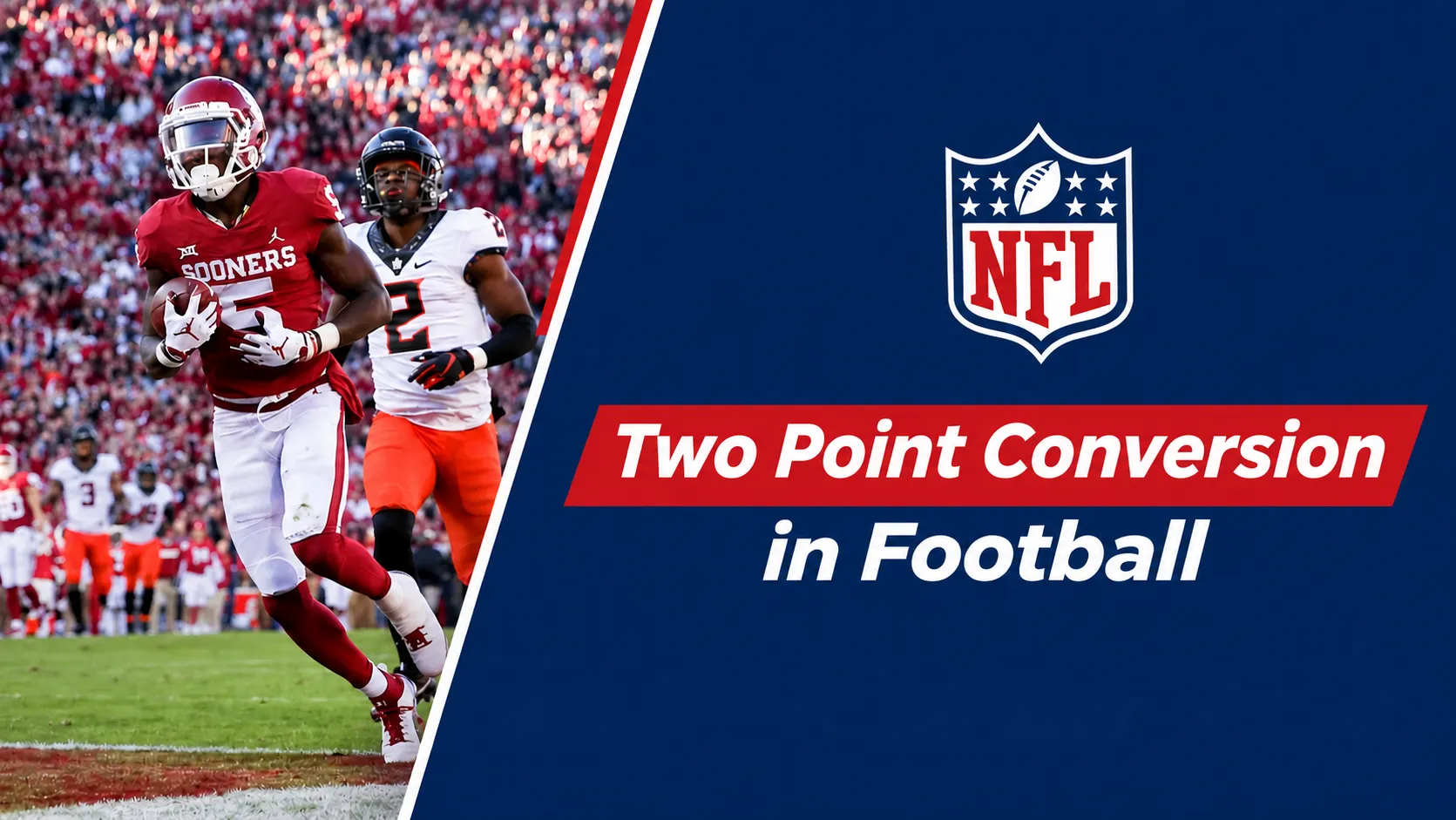
After a touchdown, teams can try for two points instead of a kick. Here is how NFL and college rules differ, in a briefing drawn from published explainers.
Every touchdown in American football is followed by a try, often called the point after touchdown. The scoring team can kick for one point or attempt a two-point conversion from scrimmage. That choice is now a regular strategic lever, not a novelty play reserved for the final minute.
A November 2, 2026 explainer published on sportDA walks through placement, timing, and how the try is officiated. The facts below are a compact briefing of that account, with a link to the original for the complete rule discussion.
Table of Contents
Where the ball is placed
According to that explainer, NFL teams snap a two-point try from the 2-yard line. College rules place the ball at the 3-yard line, so the offense has an extra yard to cover. That single yard changes play-calling and success rates, which is why coaches do not treat the two looks as identical.
The source also contrasts overtime. It describes regular-season NFL overtime as a 10-minute period in which both teams get a possession, with a tie possible if the score is still even, and longer untimed playoff overtimes. On the college side, it says teams must attempt a two-point conversion once overtime reaches later periods. Readers should confirm any live-rule change against the official NFL and NCAA books, because competition committee language can shift.
How to use this briefing
If you are new to the sport, the useful takeaway is simple: two points come from a scrimmage play after a touchdown, not from a kick. If you already know the play, the useful detail is the NFL-versus-college placement difference and the overtime wrinkle. For success rates, charts, and worked examples, use the source article linked at the end of this page.
From the source report
- A try follows every touchdown; teams choose a kick or a two-point conversion.
- NFL teams snap two-point tries from the 2-yard line; NCAA rules place the ball at the 3-yard line, according to the source explainer.
- The same briefing notes differences in overtime procedures, including a college requirement to go for two in later overtime periods.
- This page is an original summary, not a reprint of the full rules essay.
This page is an original briefing grounded in “What Is a Two Point Conversion in Football? NFL Rules Explained” by Elias Vance, published . It is not a full reprint of the source article, and the byline is the source credit rather than a staff credit on this domain.
Original URL: https://www.sportda.com/two-point-conversion-in-football/